Days 1–14: Baseline and setup
Define the starting point, set up the tracker, choose the clearest KPIs, and prepare the rollout materials for your fleet.
For fleets that want the Professional Toolkit plus a structured 90‑day rollout with implementation support and practical guidance.
Define the starting point, set up the tracker, choose the clearest KPIs, and prepare the rollout materials for your fleet.
Use the manager structure, rollout templates, and communication materials to launch the program clearly without creating a heavy admin burden.
Drivers begin applying the guidance while managers use the tracker, review prompts, and reinforcement tools to support follow‑through.
Review the results, identify where gains are appearing or getting stuck, and finish the rollout with a practical next‑step plan.
A clearer view of pricing, team requirements, time commitment, and measurement helps managers understand exactly what is involved.
Final scope depends on fleet size, site structure, reporting complexity, and implementation requirements.
The rollout is designed to fit around normal fleet operations without creating a heavy admin burden.
No telematics installation is required to get started.
Results vary by fleet type, routes, traffic, vehicle mix, and implementation quality.
The rollout includes practical working materials designed to help managers launch, track, and review progress more consistently.
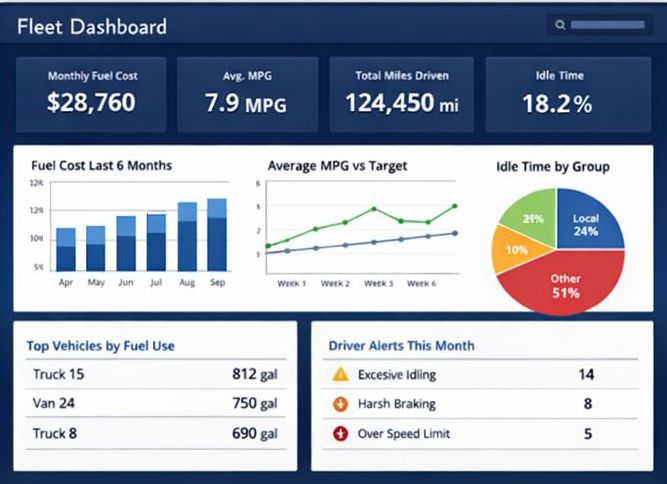
A simple starting dashboard helps managers see the current position before rollout begins, including fuel spend, mileage, and key baseline indicators.
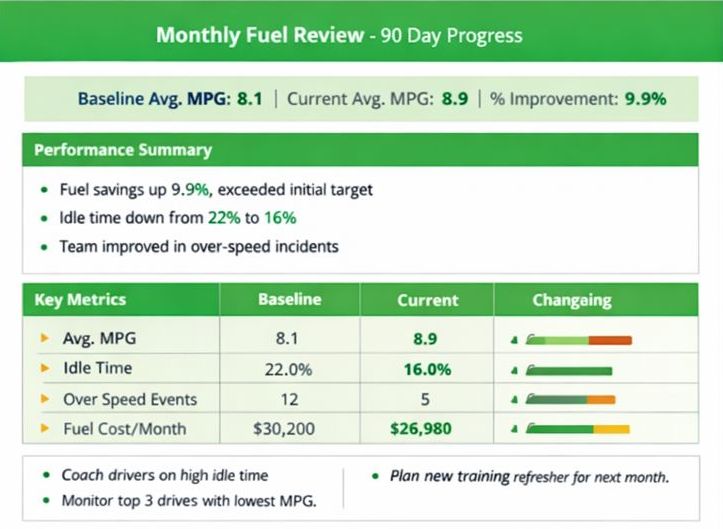
A practical review sheet used to compare progress against the baseline, identify issues, and highlight the next actions for the fleet team.
A simple internal presentation used to align managers before driver rollout.
A simple internal briefing presentation used to align managers before driver rollout, covering program purpose, driver habits, launch steps, tracking, feedback, and recognition.
Practical answers for fleet managers considering guided rollout support.
The rollout begins with baseline setup and KPI selection, then moves into manager launch, driver rollout, tracking, reinforcement, and a final 90‑day review.
No. The rollout can begin with basic fuel and mileage records or fuel‑card data. If telematics is already available, it can add useful detail, but it is not required.
Support is provided by email, supported by assisted guidance between review points. This keeps the rollout practical and easy to fit around day‑to‑day fleet operations.
Results are reviewed against the baseline established in the first two weeks. Depending on the fleet, this may include fuel use, mileage, fuel economy trends, idle indicators, and manager observations.
At the end of the rollout, you receive a structured summary and practical next‑step recommendations for what to continue, improve, or expand.
Yes, but larger or multi‑site fleets may need a broader scope. Smaller fleets can usually use the standard rollout structure, while larger operations may need a custom rollout plan.
No. This is a done‑with‑you rollout. You keep control inside your fleet while using the toolkit, templates, guidance, and structured support to make implementation easier and more consistent.
Tell us about your fleet.